.
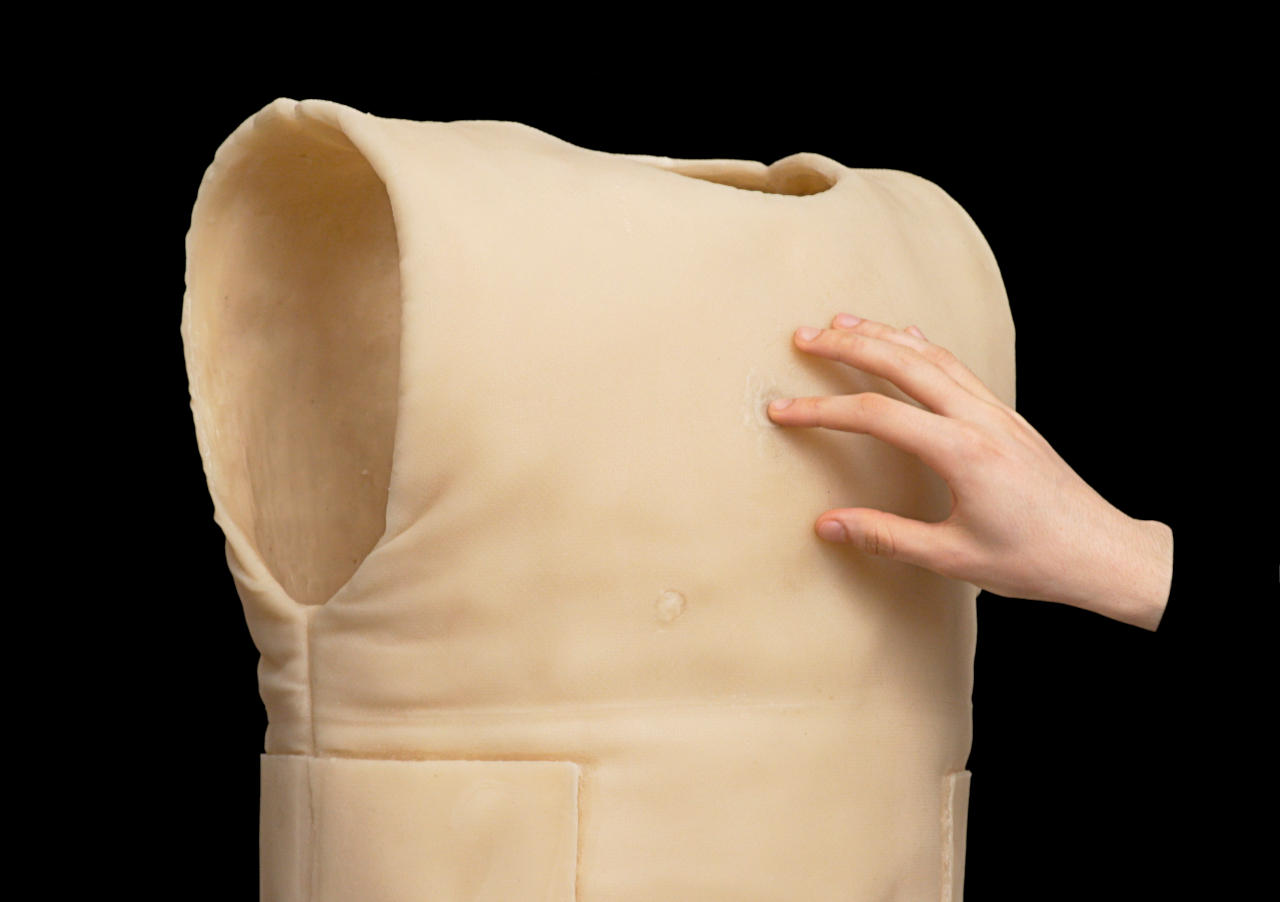
H ενότητα Shtamah αντλεί τον τίτλο της από μια πολωνική λέξη που μπορεί να μεταφραστεί ως «σχέση μεταξύ συντρόφων που βασίζεται στην αλληλοβοήθεια». Είναι μια σειρά έργων που μιλά για το πώς οι άνθρωποι συσπειρώνονται συναισθηματικά και στρέφονται εναντίον των άλλων που δεν ανήκουν στην ομάδα τους. Η ατομικότητα υποχωρεί και οι ηθικοί κώδικες επαναπροσδιορίζονται. Συχνά, η ένταξη στην ομάδα σημαίνει επιβολή ομοιόμορφης εξωτερικής εμφάνισης των μελών της ομάδας. Στο Shtamah #3 άντρες στέκονται αγκαλιασμένοι σε κύκλο. Τα σώματά τους και ο χώρος που τους περιβάλλει είναι μαύρα και διακρίνονται μόνο τα μπράτσα και τα χέρια τους. Στο Shtamah #1 οι ράβδοι που τρυπούν ένα αλεξίσφαιρο γιλέκο μοιάζουν με αυτές που χρησιμοποιεί η εγκληματολογική υπηρεσία για να υποδείξει την κατεύθυνση της βολής της σφαίρας. Εδώ παραπέμπουν στο μαρτύριο του Αγίου Σεβαστιανού ή στον Άπιστο Θωμά, ενώ ένας νεαρός άνδρας ψηλαφεί με κάποια ερωτική διάσταση την πληγή του γιλέκου. Το ίδιο το γιλέκο, ως Shtamah #4, είναι ξεχωριστό γλυπτό ως ιερό κειμήλιο ή μουσειακό έκθεμα. Τα κοντάρια στο Shtamah #2 ανακαλούν τις κινήσεις που κάνουν οι σημαίες όταν ανεμίζουν∙ εδώ χωρίς το πανί τους γίνονται απειλητικά ρόπαλα. Το Shtamah #5 είναι ένα σύνολο από ραβδάκια θυμίζουν το παιδικό παιχνίδι «μικάδο». Κάθε ραβδάκι φέρει αρχαία σύμβολα, που στη σύγχρονη ιστορία έχουν συνδεθεί με τη βία και το μίσος, π.χ. με τις νεοναζιστικές ομάδες.
Η πρακτική της Ewa Axelrad περιλαμβάνει κυρίως εγκαταστάσεις, φωτογραφία και κινούμενη εικόνα. Μεταξύ άλλων θεμάτων που επανέρχονται στη δουλειά της, μελετά την έννοια της βίας στις διαπροσωπικές και συλλογικές σχέσεις. Συνάμα εντοπίζει την ικανότητα μεταβολής των σύγχρονων δυνάμεων εξουσίας. Η έρευνα της Axelrad αντλεί υλικό συνήθως από συγκεκριμένα γεγονότα του παρελθόντος και από τις προσωπικές εντυπώσεις της από τη συλλογική μνήμη. Την ενδιαφέρει επίσης ο ρόλος της αισθητικής και του ντιζάιν στην αλληλεπίδραση συγκεκριμένων κοινωνικών δυναμικών.
>>
The Shtamah series derives its title from a Polish word that can be translated as, the “relationship between partners based on mutual assistance”. The work is about how people create emotional bonds between them and turn against others who don’t belong to their group. Individuality is on the retreat and moral codes are redefined. Often, becoming a member of the group entails the imposition of a uniform external appearance for all members of the group. In Shtamah #3 a number of men embrace in a circle. Their bodies and the space around them are black and only their arms and hands are visible. In Shtamah #1, the rods that pierce a bulletproof vest resemble those used by forensics experts to indicate a bullet’s trajectory but they also refer to the martyrdom of Saint Sebastian or Doubting Thomas, as a young man suggestively fondles the wound in the waistcoat. The vest itself, Shtamah #4, becomes a separate sculpture as a sacred relic or museum exhibit. The poles in Shtamah #2 recall the movements that flags make when swung around; here, without their cloth, become menacing clubs. Shtamah #5 is a set of sticks, a reference to the children’s game of ‘mikado’. Each stick bears ancient symbols, which in modern history have been associated with violence, hatred and neo-Nazi groups.
Ewa Axelrad’s works consists mostly of installations, photography and animation. Among other themes in her work, she examines the concept of violence in interpersonal and collective relationships, and through its manifestations in a multitude of everyday objects and architectural settings. At the heart of this interest, the artist identifies the ability of contemporary power structures to transform themselves. Axelrad’s research draws material mainly from specific events of the past and from her personal impressions of collective memory. She is also interested in the role of aesthetics and design at the convergence point of specific social dynamics.
ΟΛΟΙ ΟΙ ΚΑΛΛΙΤΕΧΝΕΣ / ALL ARTISTS
- Πάνος Κοκκινιάς. Πρέσπες, 2009
- Μαρία Βαρελά. Eν πανίον, 2020
- Ελένη Καμμά. Casting Call (Ανοιχτή οντισιόν), 2017-ongoing
- Ειρήνη Βουρλούμη. Party like there is no tomorrow, 2015
- Ειρήνη Βουρλούμη. In Waiting, 2011-2016
- Γιώργος Γύζης
- Βαγγέλης Βλάχος. 1981 (Allagi), 2007
- Αντώνης Πίττας. All Done Go Home, 2019
- Αναστάσης Στρατάκης. Έγχρωμη αποκατάσταση της τελετής αφής της ολυμπιακής φλόγας, κατά τη διάρκεια της ελληνικής στρατιωτικής χούντας (1967), 2016-2018
- Αλέξης Φιδετζής. Babel Fragments, 2022
- Zanny Begg + Oliver Ressler. The Right of Passage, 2013
- Trevor Paglen. NSA/GCHQ Surveillance Base Bude Cornwall, 2014 NSA Dagger Complex, Griesheim, Germany, 2014 NSA-Tapped Fiber Optic Cable Landing Site, Mastic Beach, New York, United States, 2014
- Trevor Paglen. Code Names of the Surveillance State, 2014
- Thomas Locher. Universal Declaration of Human Rights, Article 15, 2005-2006 / European Convention on Human Rights, Article 6, 2018-2019
- Thomas Kilpper. Burnout, 2016-2017
- Tanja Muravskaja. Ours, 2017–2018
- Szabolcs KissPál. From Fake Mountains to Faith (Hungarian Trilogy) (Από τα απατηλά βουνά στην πίστη [Ουγγρική τριλογία]), 2016
- Stéphanie Lagarde. Shepherds, 2021-2022
- Stéphanie Lagarde. Déploiements, 2018
- Stéphanie Lagarde. Bloc ballad, 2018
- Sasha Streshna. 1775, 2011, Herero, 2011, Where did Mr. President go?, 2022
- Navine G. Dossos. No Such Organisation (Δεν υπάρχει τέτοιος οργανισμός), 2018-2020
- Marta Górnicka. Constitution for the Chorus of Poles, 2016
- Marina Naprushkina. Jetzt! Alles für Alle!, 2020
- Marina Naprushkina. I Want a President, 2020-2022
- Loulou Cherinet. Statecraft, 2017
- Liu Chuang. Bitcoin Mining and Field Recordings of Ethnic Minorities, 2018
- Lise Harlev. To Be From Your Country, 2022
- Larissa Sansour. Nation Estate, 2013
- Langlands & Bell. Maison de Force, 1991
- Kristina Norman. Bring Back My Fire Gods, 2018
- Köken Ergun. Ι, Soldier, 2005
- Köken Ergun. The Flag (Bayrak), 2006
- Katya Εv. Augenmusik, 2016
- Jonas Staal. Other-Than-Statecraft #2: New Unions (Πέρα από το Statecraft #2: Νέες Ενώσεις), 2016-2019
- Jonas Staal. Other-Than-Statecraft #1: New World Summit (Πέρα από το Statecraft #1: Νέα Παγκόσμια Σύνοδος), 2012
- Jonas Staal. Collectivise Facebook (Συλλογικοποίηση του Facebook), 2020
- Jaanus Samma. Museum Display, 2019
- Ivan Grubanov. Visitor, 2002-2003
- Femke Herregraven. Liquid Citizenship, 2015/2018
- Ewa Axelrad. Shtamah, 2017
- Ella Littwitz. Yesterday, 2020
- Ella Littwitz. The Unknown Land of the South, 2017
- Daniela Ortiz. ABC of Racist Europe, 2017
- Cristina Lucas. Vexillology, 2015
- Cristina Lucas. Monochromes, 2016
- Bani Abidi. The Reassuring Hand Gestures of Big Men, Small Men, All Men, 2021