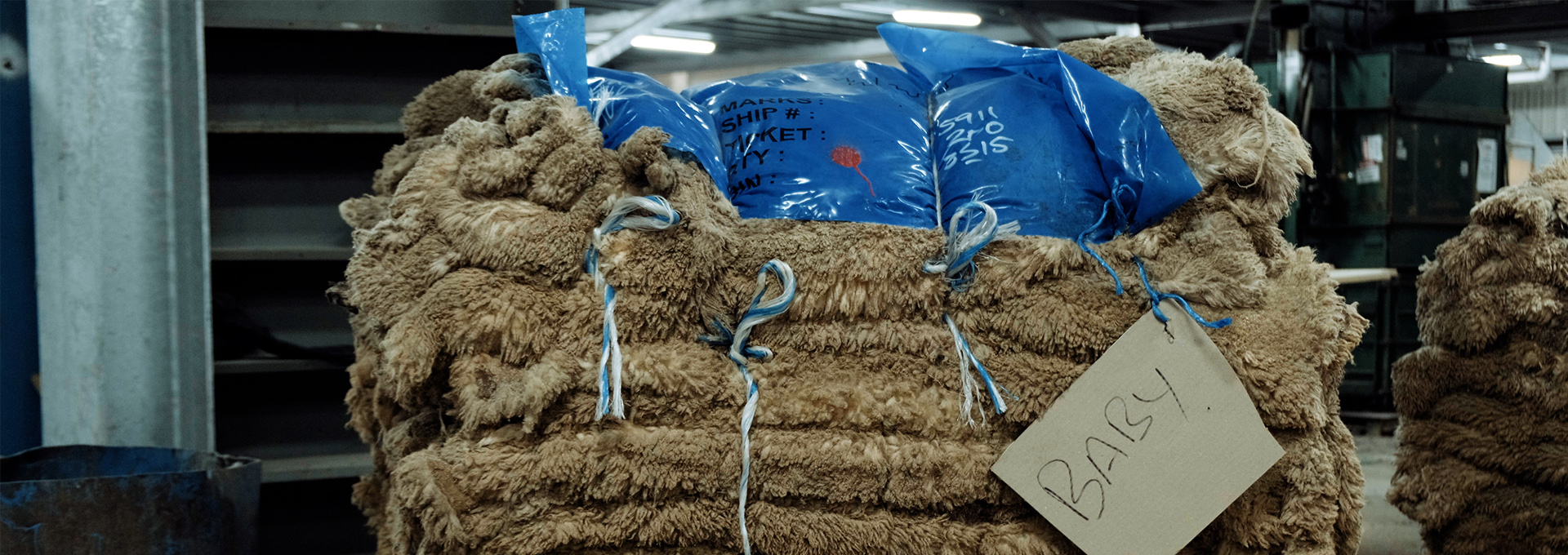
What is the fate of animals in the fashion industry today? What does ethical fashion truly mean, and what is its standing within the Greek, European, and global landscape? How is animal protection legally guaranteed in this field, and how —if at all— is it institutionalised?
As part of the public programme for the exhibition Why Look at Animals? A Case for the Rights of Non-Human Lives, ΕΜΣΤ and Eurogroup for Animals —a Brussels based NGO representing over one hundred animal protection organisations across Europe— join forces for a presentation exploring the darker side of the fashion world.
The event brings together prominent figures from the animal advocacy movement, including keynote speaker Emma Håkansson, founder of Collective Fashion Justice—an organisation dedicated to establishing a “total ethics fashion system”, Irini Molfessi, Chairman, Hellenic Animal Welfare Federation, economist and author Leonidas Vatikiotis and director/ producer Rebecca Loviconi, whose film Slay will conclude the evening.
Eurogroup for Animals represents over one hundred animal protection organisations across the EU, UK, Switzerland, Serbia, Norway, Iceland and Australia. Since its foundation in 1980, the organisation has succeeded in encouraging the EU to adopt higher legal standards for animal protection. Eurogroup for Animals reflects public opinion through its members and has both the scientific and technical expertise to provide authoritative advice on issues relating to animal protection. Eurogroup for Animals is a founding member of the World Federation for Animals which unites the animal protection movement at the global level.
Fur Farming and Ethical Fashion in Europe: The Road Ahead
In this lecture, Collective Fashion Justice’s founding director Emma Håkansson will position the current state of the European fur industry within the broader history of humanity’s exploitation of animals for fashion, and how this has changed in practice and perception over time. She will also explore the historical and present fight to end this injustice, and how we might use this information to take greater strides now, towards a total ethics fashion future in which fur is no longer socially or legally acceptable in Europe. The presentation will also outline how this shift could also lead to a just transition beyond the use and killing of other animals for their skins, and more consistent societal anti-speciesism.
The talk will invite the audience to consider their role in ending the fur trade, and end with an exploration of biomimicry solutions and alternative materials that help us move from animal-based fur and materials towards plant- and bio-based materials that benefit us all.
Economic Ethics and the Barbarity of Natural Fur
Economist and researcher Leonidas Vatikiotis analyses the economics of the natural fur industry as a distinct sector and activity within the Greek economy. Specifically, he outlines the number of businesses, employees, and total turnover across production, wholesale, and retail trade—tracked over time and by region. He also expands upon the environmental impact of the tanning industry in the Region of Western Macedonia, particularly in Kastoria.
Vatikiotis argues for the necessity of halting this specific economic activity to respect animal rights —noting that animals are used as raw materials for unnecessary production— and to protect the natural environment. He contends that continued fur farming (mink, foxes, etc.) contravenes “economic ethics,” a concept inherent to Political Economy that mandates respect for the inalienable rights —whether institutionalised or not— of the natural world.
Finally, he emphasises the need to fully safeguard the social and economic rights of workers and local communities as a prerequisite for implementing the cessation of fur production. The Region of Western Macedonia is already in a steady decline across all indicators of economic and social growth due to the aggressive transition away from lignite (coal). Consequently, the termination of fur production must coincide with a broader economic transformation of the region, ensuring there are no adverse social consequences.
Slay is a feature-length documentary following investigative filmmaker Rebecca Cappelli Loviconi as she travels across five continents to expose the hidden cost of fashion. What begins as a journey into luxury quickly reveals a disturbing world of greenwashing, deceptive labeling, animal cruelty, and industry cover-ups tied to some of the world’s most powerful brands. Blending the visual sophistication of Vogue with the investigative edge of Vice, SLAY pulls back the curtain on fur, leather, and wool production while spotlighting innovative, ethical alternatives already reshaping the future of fashion. Provocative, stylish, and urgent, the film challenges consumers to reconsider what they wear—and at what cost.
BIOGRAPHIES
Irini Molfessi was born and raised in Paris, within the multicultural environment of the Greek diaspora. She studied languages, philology, and photography, and lived between Paris, Brussels, and London before settling in Athens in 1987. As well as being in charge of strategic planning for the Panhellenic Animal Welfare Federation, of which she has been president from its founding in 2007 until today, Molfessi’s engagement with animal protection includes managing a model dog shelter in Aegina. Her lucid arguments, extensive knowledge, and dedication to the struggle for animal rights and animal protection render her one of the most powerful voices of the animal welfare movement in Greece.
Emma Håkansson is the founding director of charity Collective Fashion Justice, working to create what she calls a ‘total ethics fashion system’ benefitting people, our fellow animals and the planet ahead of profit. With a focus on shifting the industry beyond animal-derived materials, Håkansson is also the author of books including Total Ethics Fashion (2023) and Sub-Human: A 21st-Century Ethic; on Animals, Collective Liberation, and Us All (2024). She is an award-winning film director, a 2025 Vogue Business 100 Innovator referenced as the fashion industry’s ‘moral compass’, and her organisation has been behind policies such as NYFW’s recent fur ban.
Leonidas Vatikiotis holds a degree from the Department of Statistics and Insurance Science at the University of Piraeus and earned his PhD from the Department of Sociology at Panteion University. He spent over 20 years in journalism, working across newspapers, magazines, and television, with a focus on international affairs and economics. He has also scripted and researched ten documentaries, most of which have received awards both in Greece and abroad. Additionally, he has taught at various universities in Greece and Cyprus. Currently, he serves as an economist and researcher at the Small Enterprises’ Institute of the Hellenic Confederation of Professionals, Craftsmen, and Merchants (IME GSEVEE) and teaches in a postgraduate program at the University of Crete.
Rebecca Loviconi is an award-winning filmmaker and photojournalist based in Switzerland. A French citizen fluent in Mandarin, she lived in Asia for over 18 years — including Beijing, Shanghai, Hong Kong and Singapore — shaping a cross-cultural perspective that deeply informs her work. Her films and photography seek to empower audiences to become a line of defense for animals, the planet, and vulnerable communities, while pushing animal rights into the mainstream conversation. Rebecca has delivered more than one hundred lectures worldwide for leading corporations, universities and institutions, including appearances at the EU, Swiss and UK Parliaments. She is also a producer and public speaker committed to using storytelling as a catalyst for change.
ONLINE TICKETS
Ticket: 4€
Advance reservation required
Language: English
Ticket Change and Cancellation Policy
No changes allowed (to another day).
No cancellations allowed.
Due to technical issues, payment processing via IRIS is temporarily unavailable.